5 Quiet Signs an Experience Certificate Needs a Second Look
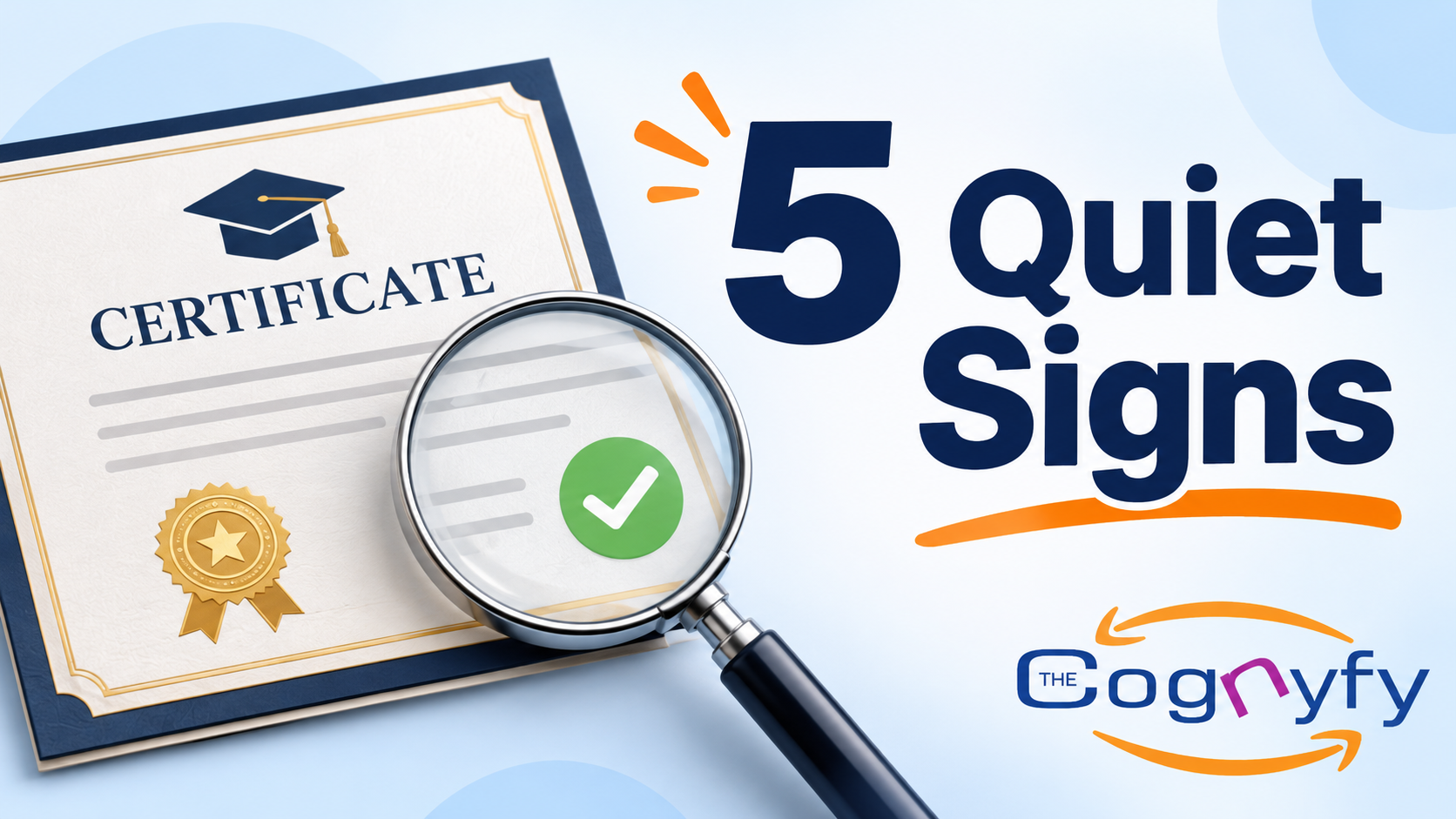
5 Quiet Signs an Experience Certificate Needs a Second Look
Nobody forges a certificate and writes “FAKE” at the top.
The ones that slip through are the ones that look almost right: a neat letterhead, a confident signature, a believable designation. Everything seems fine until someone actually checks.
That’s the problem. Most HR teams don’t miss these documents because they’re careless. They miss them because they’re busy, the candidate is impressive, and the certificate looks “good enough.”
So here are five quiet signs that a certificate deserves a second look. They’re not proof of anything, only reasons to pause and verify.
1. The details are slightly off
Look at the small things first: the company name spelling, the logo quality, the address, the fonts, the formatting.
A real company usually issues certificates in a consistent format. If the logo looks stretched, the name is spelled two different ways, or the address is missing, it’s worth asking why.
2. The dates don’t quite add up
Compare the certificate with the resume and the other documents:
- Does the joining date match the resume?
- Does it overlap with another job or a college course?
- Is the relieving date suspiciously close to the next employer’s joining date?
One mismatch can be an honest mistake. A pattern of mismatches is a signal.
3. The role sounds bigger than the story
A designation that’s a few steps above the candidate’s experience level, or a job description so generic it could fit anyone, deserves a question.
Ask the candidate to walk you through what they actually did day to day. People who did the work can describe it easily. People who didn’t often stay vague.
4. No one is accountable on the document
Check who signed it. Is there a name, a designation and a working contact? Or is it a signature with nothing behind it?
Be careful with personal email IDs in place of a company address, missing phone numbers, or a signatory who can’t be reached. A genuine certificate should be traceable to a real person at a real company.
5. Verification feels like a problem
This one isn’t about paper at all. It’s about behavior.
Genuine candidates are usually happy to help with verification. Be mindful if they delay sharing documents, can only provide a photo or scan, discourage you from contacting the employer, or suddenly turn unreachable once you ask.
Don’t read too much into it, though. People sometimes have good reasons, such as a closed company or an old employer who isn’t responsive. That’s exactly why checking facts matters more than guessing.
A quiet sign is a question, not a verdict
Here’s the part that matters most. Spotting one of these signs doesn’t mean the candidate is dishonest. Companies shut down, HR teams change and documents get reissued in odd formats.
The fair approach is simple:
- Notice the sign
- Ask the candidate calmly
- Verify with the employer
- Decide on facts, not assumptions
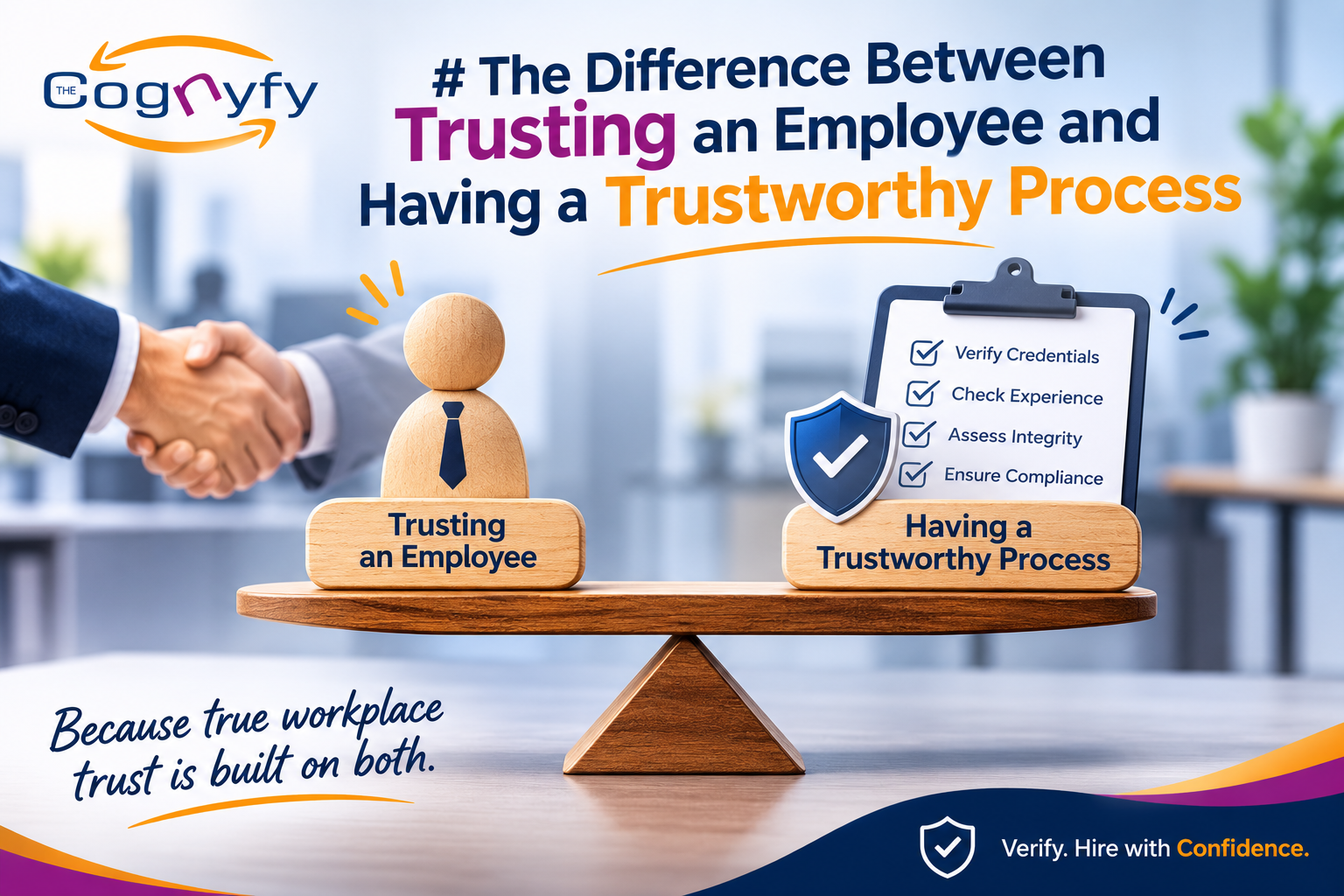
That protects your organization from a risky hire, and it protects honest candidates from being judged unfairly.
Don’t leave it to a glance
A quick look at a certificate takes ten seconds. A wrong hire can cost months of time, money and trust.
At Cognyfy, we help HR teams verify employment details properly, so every hiring decision rests on facts. If you’d like to see how it works, visit www.cognyfy.com.
Because a certificate is a claim. Verification is the proof