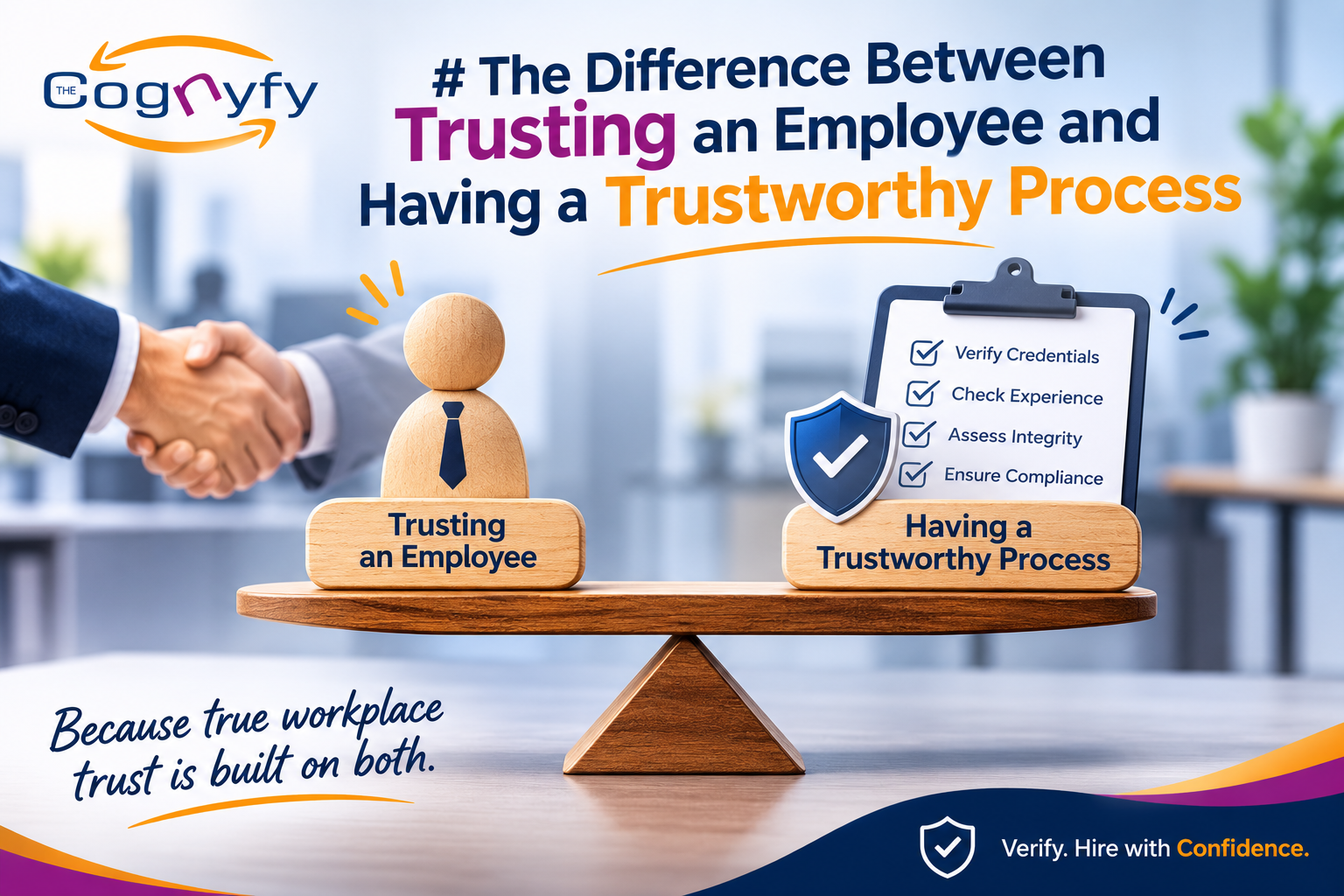
The Difference Between Trusting an Employee and Having a Trustworthy Process
Why modern organizations need more than good intentions when building workplace trust.
Every organization wants to hire trustworthy people. Recruiters look for the right qualifications, hiring managers look for relevant experience, and business leaders look for people who can drive organizational growth.
But one important question remains: Is trusting a candidate enough, or should organizations support that trust with verified information?
A candidate may have an impressive résumé, communicate confidently, and perform exceptionally well in an interview. However, the information presented during recruitment may not always tell the complete story.
This is where employee background verification becomes an important part of responsible hiring.
Trust Is Important, But Verification Makes It Informed
Trust is the foundation of every professional relationship. However, recruitment decisions should not depend entirely on assumptions or first impressions.
Consider a few common hiring situations:
A candidate claims five years of professional experience, but employment records show a different timeline.
An educational qualification looks impressive, but its authenticity has not been established.
A candidate's employment history contains unexplained gaps.
Information shared during recruitment differs from details received during verification.
These discrepancies do not automatically indicate dishonesty. There may be genuine explanations behind them.
However, they highlight why organizations need a structured background verification process to establish facts before making important employment decisions.
What Should Organizations Verify Before Hiring?
A comprehensive background verification process helps employers assess relevant information about a candidate's professional and personal credentials, depending on the role and applicable requirements.
1. Employment Verification
Employment verification helps establish whether a candidate's previous employment details are accurate. This may include previous employer names, designations, employment periods, and other relevant information.
2. Education Verification
Academic qualifications play an important role in many hiring decisions. Education verification helps establish the authenticity of degrees, certificates, and other educational credentials.
3. Identity Verification
Identity verification helps organizations establish confidence in the identity information provided by candidates through appropriate and reliable checks.
4. Financial Integrity Checks
For roles where financial responsibility is relevant, appropriate financial integrity checks can help organizations assess specific risk indicators in accordance with applicable laws and consent requirements.
5. Moonlighting Checks
Undisclosed concurrent employment can create potential conflicts of interest or policy concerns. Moonlighting checks can help employers identify relevant situations while considering employment agreements, applicable policies and the candidate's explanation.
The objective of these checks is not to find reasons to reject candidates. It is to help organizations make informed decisions using relevant and verified information.
Verification Should Be Fair, Not Just Thorough
One of the most important aspects of background verification is understanding that a mismatch does not automatically mean misconduct.
For example:
An employment date discrepancy could result from an administrative error.
A previous employer may take time to respond.
A missing document may simply require additional clarification.
Different records may contain variations that need further investigation.
This is why a responsible background verification process should focus on accuracy, transparency and fairness.
Organizations should prioritize reliable information sources, appropriate checks, proper documentation and opportunities for candidates to clarify discrepancies.
A good verification process should establish facts, not create assumptions.
The Hidden Cost of an Unstructured Hiring Process
When background verification becomes an afterthought, organizations may encounter several operational challenges.
Delayed Hiring Decisions
Incomplete documents, inconsistent information, and delayed verification responses can slow down recruitment.
Increased Administrative Work
Without a structured process, HR teams may spend considerable time following up with candidates, previous employers, and verification sources.
Unnecessary Hiring Uncertainty
When information is not properly verified, hiring managers may struggle to make confident and consistent decisions.
Workplace Policy Concerns
Undisclosed employment arrangements, inaccurate credentials, or unresolved discrepancies may create operational and policy-related challenges.
A well-planned background verification process helps HR teams manage these concerns more systematically.
Building a Workplace Where Trust Is Supported by Facts
A trustworthy workplace does not develop simply because an organization hires people with impressive résumés.
It develops through transparent expectations, responsible policies, consistent processes and informed decision-making.
Background verification should therefore be considered an important part of an organization's wider commitment to workplace integrity.
It is not about questioning every candidate. It is about treating candidates fairly while maintaining appropriate standards.
At Cognyfy, we believe that informed hiring begins with reliable information. Our background verification solutions help organizations strengthen their hiring processes through checks designed to support transparency, accuracy, and confidence.
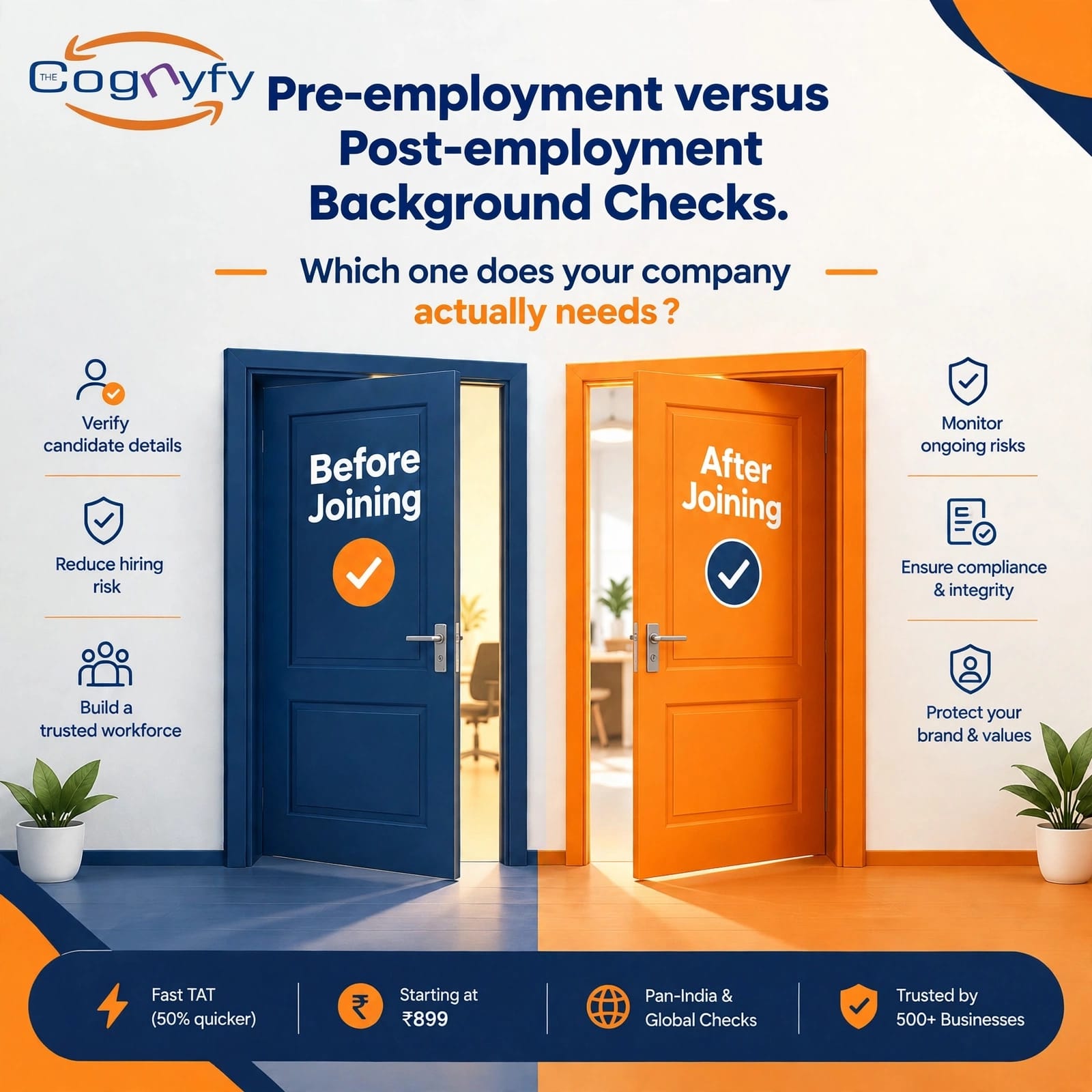
From pre-employment and post-employment background checks to financial integrity checks, moonlighting checks, and exit and stay interviews, the focus is on helping organizations make more informed workforce decisions.
Final Thought: Trust People. Verify Information. Build Better Workplaces.
The strongest organizations do not have to choose between trusting their employees and protecting their business interests.
They build processes that support both.
Because a trustworthy workplace is not built on assumptions alone. It is built on transparency, accountability and informed decisions.
Cognyfy – Background Verification Solutions
Make every hiring decision more informed.