Hired Two Years Ago. Still Sure? Why HR Needs a Re-Verification Habit
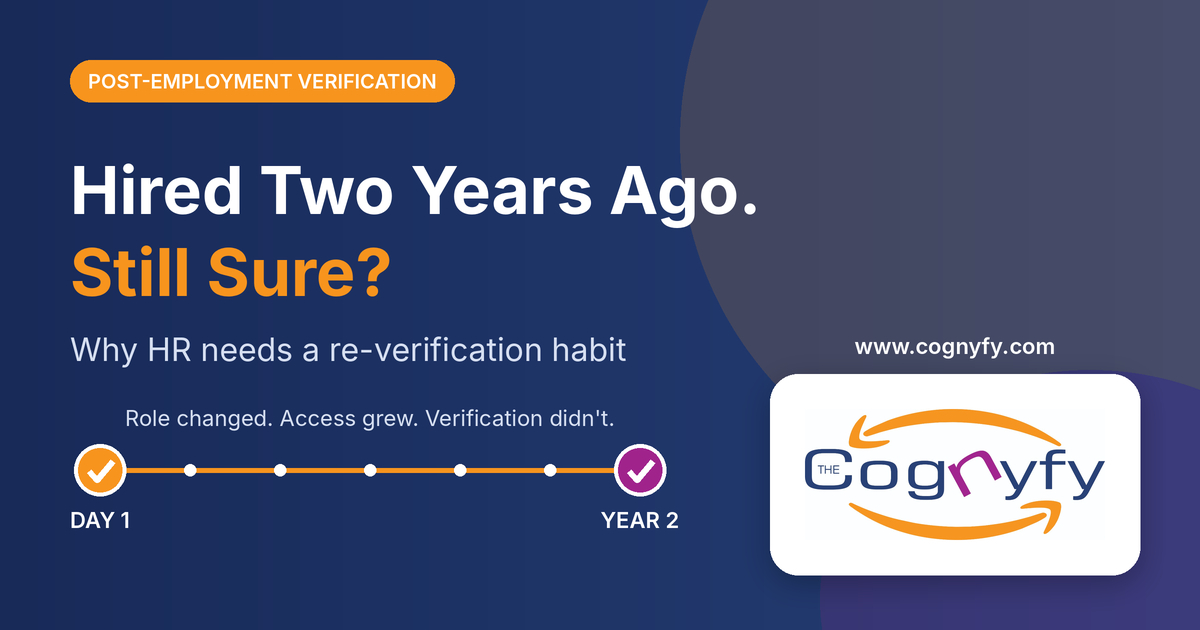
Hired Two Years Ago. Still Sure? Why HR Needs a Re-Verification Habit
Think about the last person you promoted. You checked their references and their documents, and they sailed through onboarding. That was the last time anyone looked.
Most companies treat verification like a gate: walk through once, and you’re in for good. But people change roles, take on bigger responsibilities, and move into positions with access to money, data, and decisions. The check you ran at hiring doesn’t always match the job someone is doing today.
The gap nobody talks about
Here’s a question worth asking in your next HR meeting: who in our company has more access today than they had on the day we verified them?
Finance executives who now approve payments. Team leads who now handle client data. New managers who now hire for you. In each case, the role grew, and the verification stayed frozen in time.
That’s not a criticism of HR. It’s a process gap, and it’s easy to fix.
When post-employment verification makes sense
You don’t need to re-check everyone every year. That would be exhausting and a little insulting. Focus on moments that matter:
- Promotions into sensitive roles, especially in finance, compliance, procurement and IT
- Internal transfers into departments with higher risk or regulatory exposure
- Role changes involving money, client data, or signing authority
- Audit or regulatory requirements, where documented verification is expected
- Returning employees or long-gap rehires, where the story since they left is unknown
- Periodic checks for high-trust positions, applied fairly and consistently
The keyword is consistency. When the policy applies to a role rather than a person, nobody feels singled out.
Do it right, or don’t do it
Re-verification can go wrong fast if it’s handled badly. A few ground rules:
- Tell people upfront. Put it in the employment policy and the offer letter, so it’s never a surprise.
- Tie it to the role, not the individual. Policies protect trust. Suspicion destroys it.
- Get consent and stay compliant. Verification should always be documented and permission-based.
- Keep it quick. If the process drags on for weeks, employees start to wonder what’s wrong.
- Treat results with discretion. Only the people who need to know should know.
Done well, employees see it as professionalism, not policing. Done badly, it feels like an investigation.
Make it a habit, not a project
Pre-employment checks have a built-in deadline: the joining date. Post-employment checks don’t, which is exactly why they get postponed forever. The fix is to put re-verification on the HR calendar the same way you’d schedule an appraisal cycle or a policy refresh. Once it’s routine, nobody has to fight for approval each time.
Where Cognyfy fits in
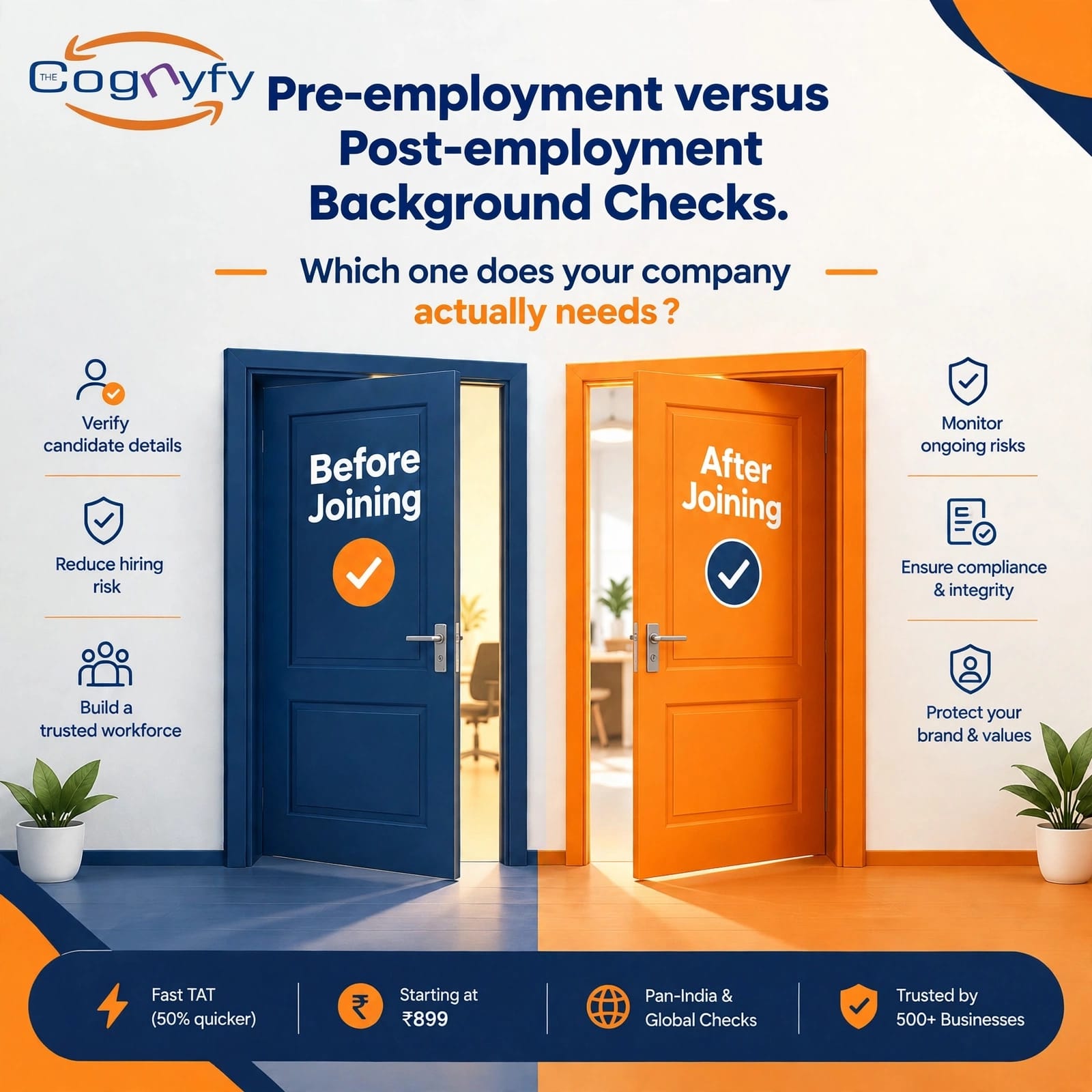
At Cognyfy, we help HR teams verify people at both stages of the employee lifecycle: before they join and after they’re in the seat. Our job is simple. We take the checking off your plate so you can focus on your people.
The takeaway
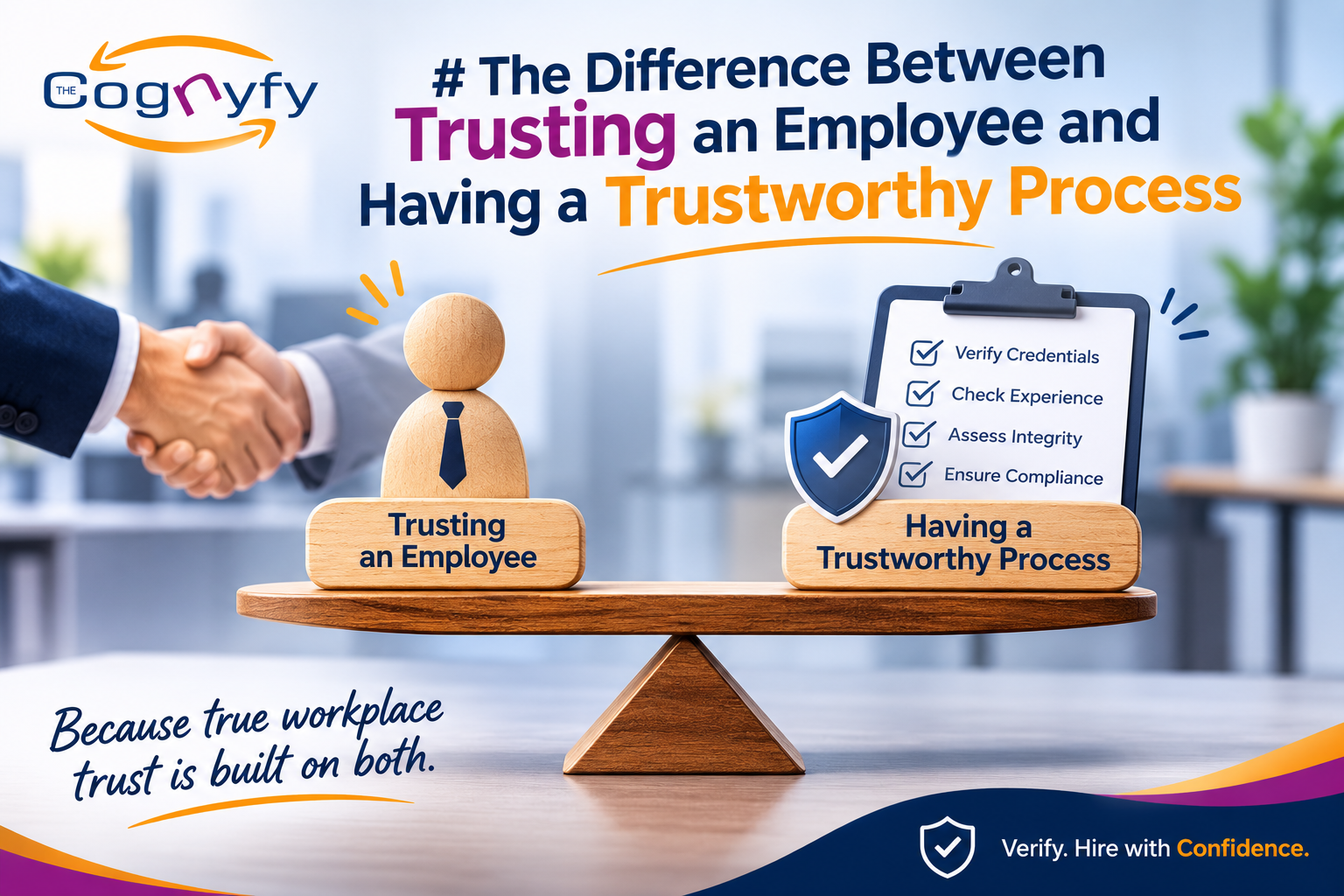
Trust is the foundation of every workplace, but trust is stronger when it’s backed by process. A verification habit that continues after Day 1 protects your company, your clients and, honestly, your good employees too.
Because the people who’ve done everything right have nothing to worry about, and they deserve to work in a company that takes integrity seriously.
Want to build a verification habit that works beyond onboarding?
Talk to the Cognyfy team today.
👉 www.cognyfy.com