The Background Verification Checklist Every HR Team Should Keep Open
Most hiring mistakes don't happen because HR was careless. They happen because someone kept the process in their head.
One recruiter checks the degree; someone kept the process in their head. Another skips employment history because the offer is urgent. A third assumes the previous team already did the address check. Three months later, you are explaining to management why a "verified" hire isn't what the resume said.
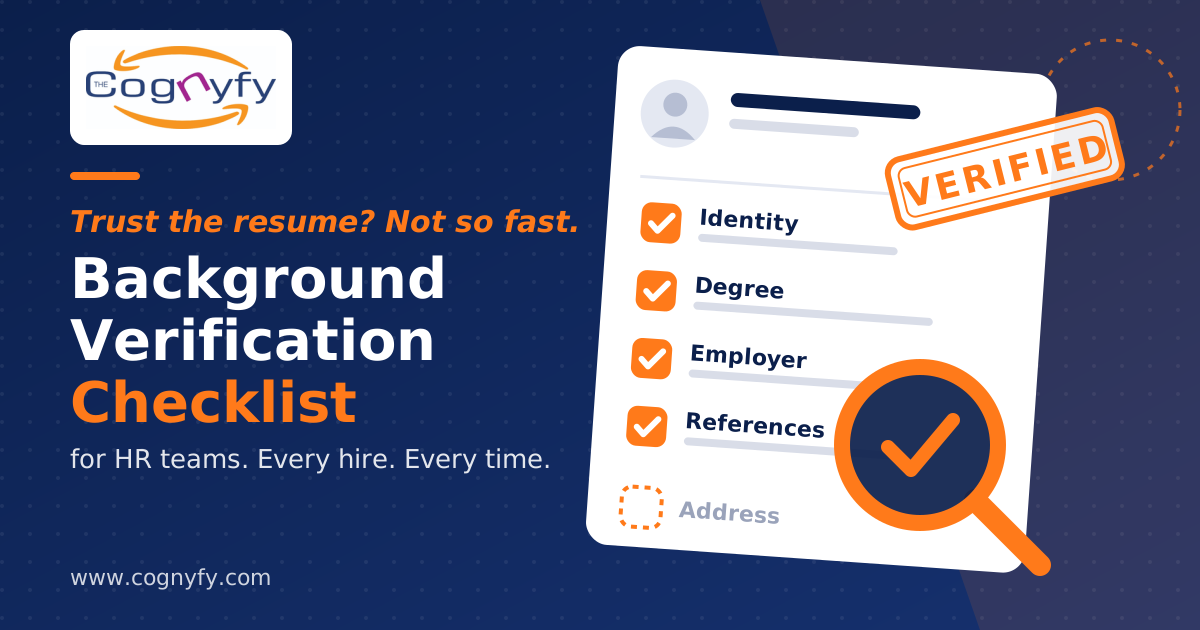
A checklist fixes that. Not a fancy one. Just a clear, repeatable list that every hire goes through, every time. Here is the one we recommend.
Before you start: three ground rules
- Get written consent first. No check begins without the candidate's signed authorization. It protects them and you.
- Decide the checks by role, not by mood. A finance executive and a warehouse supervisor need different depth. Write it down once, then apply it consistently.
Verify before the joining date, not after. Post-joining checks are useful, but a surprise at the offer stage is far cheaper than a surprise in month three.
The checklist
1. Identity verification
Confirm the candidate is who they say they are. Match government ID details with the name, date of birth, and photo on the resume and application form. This is the foundation. If identity doesn't hold, nothing else matters.
- Government ID collected and matched
- Name and date of birth consistent across documents
- Contact number and email confirmed
2. Education verification
Degrees are the most commonly inflated item on a resume. Don't rely on a photocopy of a certificate. Verify directly with the university or board.
- Highest qualification verified at source
- University or board recognized
- Course name, year of passing, and roll number match the resume
- Gaps or unusually long durations questioned
3. Employment verification
Check the last two to three employers at minimum. Confirm designation, dates of joining and exit, and reason for leaving. A relieving letter alone is not proof.
- Company is real and operational
- Designation and tenure match
- Exit status confirmed (resigned, terminated, absconded)
- Salary claims cross-checked where the role is senior
4. Reference checks
Talk to someone who actually supervised the candidate, not a friend with a convenient job title. Ask about role performance, reliability, and conduct. Two or three honest minutes here can tell you more than a thick file.
- At least two references contacted
- One reference is a former manager
- Feedback recorded in writing
5. Address verification
Confirm the current and permanent address. It sounds routine, but it matters for roles involving cash, company assets, or field work.
- Current address verified
- Permanent address verified
- Mismatches explained
6. Criminal and court record check
Essential for roles with access to money, data, customers, or vulnerable people. Run the check according to the role's risk level and applicable law.
- Criminal record check completed
- Court record search completed where relevant
- Results reviewed fairly, with context
7. Role-specific checks
Not every role needs these, but when it does, skipping them is expensive.
- Professional licenses or memberships (finance, healthcare, engineering)
- Credit history for roles handling funds
- Database and global checks for candidates with overseas history
- Social media and public profile review, where policy allows
After verification: what HR should do with the result
Getting a report is half the job. The other half is how you act on it.
- Don't judge on one flag. A minor discrepancy, like a date off by a month, is not the same as a fabricated degree. Ask the candidate to explain before deciding.
- Be consistent. The same finding should lead to the same outcome for every candidate. Otherwise, you create a legal and cultural problem.
- Document everything. Keep consent, reports, and decisions on file.
- Re-verify periodically. For sensitive roles, a person who was clean two years ago may not be today.
Common mistakes this checklist prevents
- Treating a photocopied certificate as proof
- Skipping checks on "urgent" or "referred" hires
- Verifying only the last employer
- Starting checks after the candidate has already resigned from their old job and joined yours
- Having no written policy, so every recruiter improvises
Make it a habit, not a one-off
Print this list. Pin it in your ATS. Make it part of your onboarding workflow. The best verification process is the boring one that never gets skipped.
If you want a partner who can run these checks quickly and give your team clear, usable reports, talk to us at www.cognyfy.com. Your candidate, our screening.