The Future of Trust at Work: Can Technology Make Workplaces More Human?
For the better part of a decade, enterprise software sold HR leaders a seductive promise: zero-touch hiring.
The pitch was simple. Strip away every manual step between a job application and an offer letter. Let algorithms rank resumes, let chatbots schedule interviews, let APIs verify documents in seconds, and let automated workflows onboard new hires without a single phone call. Efficiency was treated as the ultimate virtue. Friction, we were told, was the enemy.
Then reality caught up.
Across India’s corporate corridors—from hyper-growth SaaS firms in Chennai to sprawling Global Capability Centers in Hyderabad and Gurugram—leaders began noticing an uncomfortable paradox. Hiring had never been faster, yet mutual trust inside organizations felt increasingly fragile. Candidates ghosted offers after clicking "accept" on automated portals. Managers struggled to build psychological safety with remote teammates they had never met in person. And periodic waves of anxiety around dual employment, inflated credentials, and data leaks left HR teams oscillating between blind trust and heavy-handed surveillance.
In rushing to remove friction from hiring, many organizations accidentally stripped away the very human interactions where trust is actually forged.
Which leaves modern business leaders facing a defining question: As workplaces become more digital, how do organizations make sure that trust remains human?
The Illusion of "Zero-Touch" HR
Artificial intelligence has undeniably rescued People Operations from drowning in administrative paperwork. When an Indian enterprise opens a single engineering or operations role and receives four thousand applications overnight, manual triage is impossible. Automation brings order to chaos, eliminates mundane bottlenecks, and gives lean HR teams breathing room.
The problem begins when organizations mistake process automation for relationship building.
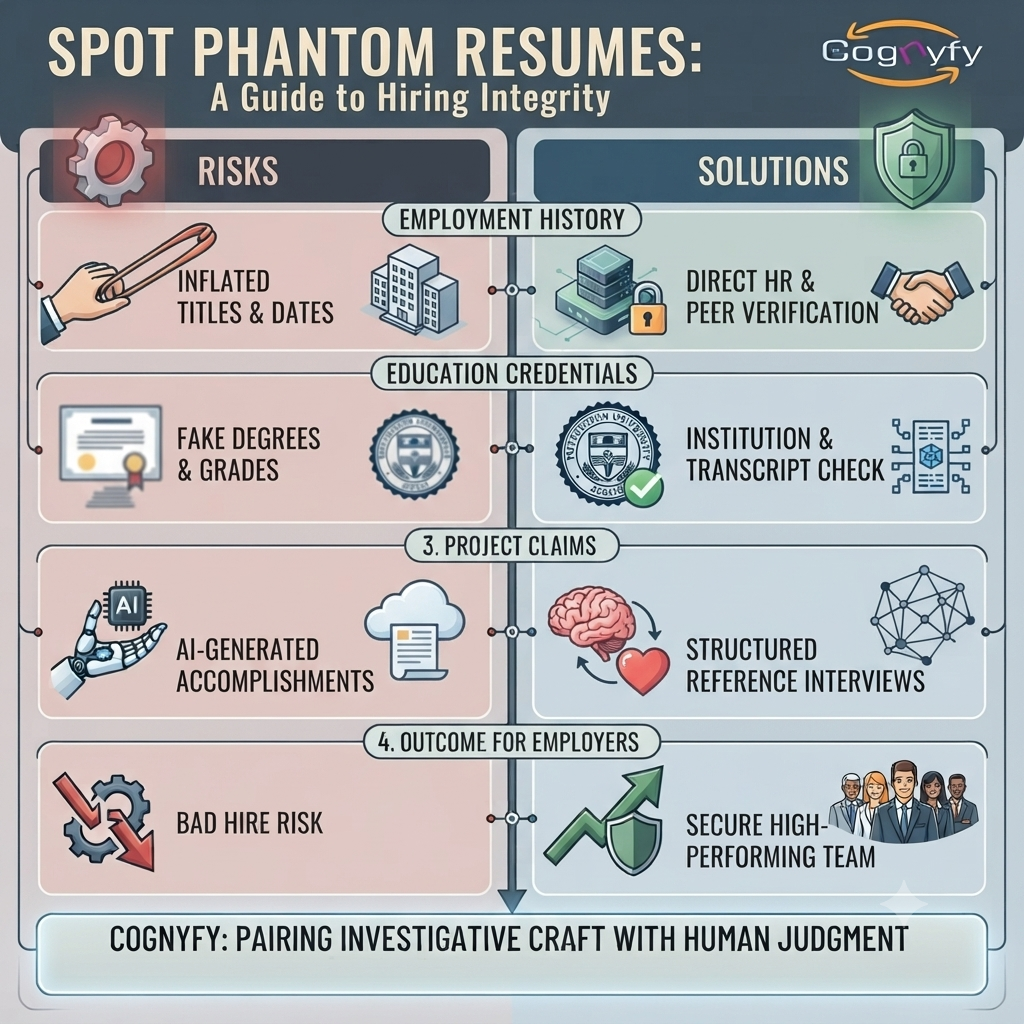
Software is exceptionally good at verifying binary facts—whether a tax ID matches a database, whether a university degree carries a valid registration number, or whether employment dates align. What software cannot measure is intent, resilience, or character. When every stage of a candidate’s journey is mediated by cold automation, the subtext is unmistakable: you are a record to be processed, not a colleague to be welcomed.
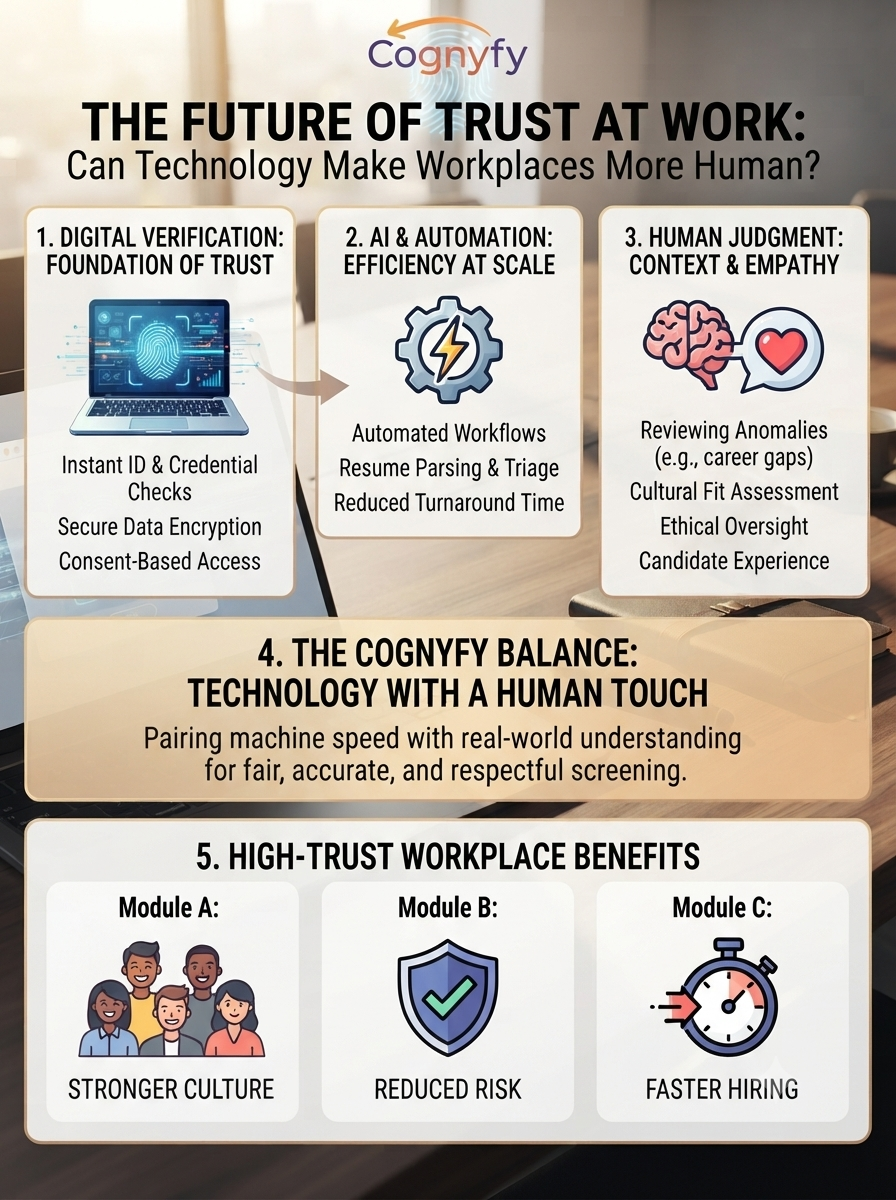
In the future of HR, technology will be table stakes. Every company will have access to similar AI models and cloud workflows. The organizations that stand apart will be those that resist the urge to automate empathy—and instead use HR technology to create space for deeper human discernment.
Why Judgment Cannot Be Outsourced to an Algorithm
Anyone who has hired talent in India knows that careers rarely follow neat, standardized templates.
A gifted product designer might have a nine-month gap because she stepped away to care for an aging parent. A reliable operations manager might show an apparent mismatch in employer names because his previous startup was quietly acquired twice in three years. A candidate from a smaller town might have regional documentation quirks that trigger automated red flags in rigid screening software.
An algorithm sees anomalies and downgrades the profile. A seasoned human reviewer picks up the phone, asks a respectful question, listens to the context, and recognizes integrity.
When companies rely blindly on automated red-flag engines, they don’t just eliminate risk—they quietly filter out unconventional, high-potential talent. True organizational intelligence requires pairing machine speed with human judgment. Technology should surface signals, not deliver unappealable verdicts.
The New Social Contract Between Talent and Enterprises
Workplace trust is no longer an asymmetrical equation where employers hold all the cards and candidates simply endure whatever vetting process is thrown at them. Today’s professionals scrutinize their prospective employers with the same rigor companies apply to hires.
What Employees Read Between the Lines
Every touchpoint before Day One broadcasts company culture. When a candidate is asked to upload sensitive personal documents into a clunky, poorly explained portal—or receives terse, automated compliance reminders with zero human point of contact—doubt creeps in before they even join. Respecting a candidate’s time, dignity, and privacy has become the first real test of employer credibility.
What Organizations Actually Need
At the same time, enterprises are operating with higher stakes than ever. Distributed teams routinely access sensitive client environments, proprietary codebases, and regulated financial data from living rooms hundreds of miles away from headquarters. Leaders cannot afford naive optimism. They need verified certainty about who is entering their ecosystem—without turning onboarding into an adversarial interrogation.
Digital Identity and Credibility Without the Coldness
As remote and hybrid models mature, digital identity verification has become the invisible infrastructure of modern work. When handshakes are replaced by video calls, verifiable credentials allow organizations to extend trust quickly and confidently.
Yet verification works best when it is invisible until it matters—and deeply human when nuance arises. Rather than acting as a suspicious gatekeeper, modern screening should function as a quiet assurance mechanism that protects everyone in the room. It ensures that high performers aren’t undermined by peers who fabricated credentials, and it gives leaders the confidence to delegate real autonomy from week one.
Rethinking Screening: Rigor Paired With Respect
In many boardrooms, employee background verification is still treated as an afterthought—a compliance box ticked quietly in the background between offer acceptance and onboarding. Forward-thinking CHROs are flipping that mindset. They recognize that how you verify someone sets the emotional tone for their entire tenure.
This conviction sits at the core of Cognyfy Private Limited, an Indian Background Verification Company in India built around a deliberate counter-cultural premise: "Technology with a Human Touch."
In an industry racing toward pure automation, Cognyfy treats technology as an enabler rather than a substitute for human accountability. Intelligent workflows handle document collection, tracking, and database cross-checks swiftly—eliminating the endless email chases that frustrate both recruiters and candidates. Yet behind that digital speed sits a layer of trained human specialists who verify nuances directly, communicate transparently with candidates, and interpret edge cases with fairness.
Look at how that balance plays out across core screening pillars:
Identity and Address Verification: Digital checks establish rapid authenticity, while localized ground verification accommodates the real-world housing and documentation realities of Indian cities and towns without penalizing mobile talent.
Employment and Education Verification: Direct institutional and employer validations ensure merit remains the foundation of every hire, protecting workplace fairness without subjecting candidates to bureaucratic delays.
Reference Checks: Moving past robotic multiple-choice forms toward structured, thoughtful conversations that reveal how a person actually collaborates under pressure.
Criminal and Global Database Verification: Safeguarding organizational integrity and international compliance standards while maintaining strict procedural fairness.
When verification is executed with this level of craft, it stops feeling like surveillance and starts feeling like mutual respect.
Four Principles for High-Trust Digital Workplaces
Building a workplace where technology amplifies humanity requires deliberate architectural choices by HR and business leaders:
Design for Transparency, Not Opacity: Tell candidates upfront what is being verified, why it matters for the role, and how long it will take. Uncertainty breeds anxiety; clarity builds trust.
Treat Privacy as a Leadership Mandate: With India’s Digital Personal Data Protection framework raising the bar on accountability, minimal data collection, explicit consent, and bank-grade data security are fundamental signals of respect.
Keep a Human in the Loop for Exceptions: Never let an automated system reject or stall a candidate over a discrepancy without human review and a fair opportunity to clarify.
Measure Candidate Sentiment Alongside Turnaround Time: A 24-hour verification turnaround means very little if the process leaves your newest hire feeling alienated before they even meet their manager.
Where HR Screening Goes Next
Over the next few years, enterprise screening will evolve from fragmented, point-in-time checks into seamless, consent-driven trust credentials that move cleanly with professionals across their careers. Turnaround times will shrink further, integrations with core HR platforms will become effortless, and predictive analytics will spot systemic risks earlier.
Yet the central truth of organizational life will remain unchanged. People do not commit their best ideas, discretionary effort, or loyalty to an algorithm. They commit to institutions that treat them fairly, protect their dignity, and exercise wise human judgment when it counts.
The Bottom Line on Digital Trust
Technology cannot manufacture trust on its own—but used thoughtfully, it can clear away the noise, bias, and friction that get in the way of human connection.
In the future of HR, the most progressive workplaces will not be the ones that replace human touch with code. They will be the ones that use smart technology to honor human potential, proving that rigor and empathy belong on the same side of the table.
5. Frequently Asked Questions (FAQs)
1. Why can "zero-touch" HR automation unintentionally harm workplace trust? When every interaction during hiring and onboarding is fully automated, candidates often feel treated like data points rather than future colleagues. Lack of human context can also lead to unfair flags on unconventional career paths, creating friction before an employee’s first day.
2. How does a background verification company in India combine technology with human judgment? Intelligent automation accelerates routine tasks such as consent capture, identity matching, and status tracking. Human verification specialists then step in to validate complex employment histories, conduct nuanced reference conversations, and review discrepancies fairly so context is never lost.
3. How does ethical employee background verification strengthen company culture? Transparent, consent-based screening creates a level playing field. Existing employees know their teammates were hired on genuine merit, while incoming hires experience a respectful, organized process that signals integrity and professionalism from day one.
4. What role does digital identity verification play in hybrid and remote work? In distributed workplaces where teams rarely meet in person, digital identity verification provides foundational certainty that remote hires are authentic, protecting sensitive intellectual property, client data, and organizational security without slowing down onboarding.
5. What should Indian enterprises prioritize when choosing an HR screening partner? Beyond turnaround speed, enterprises should look for strict adherence to data privacy and consent standards, comprehensive coverage across employment, education, identity, address, reference, and global database checks, and a clear commitment to human review whenever discrepancies arise.